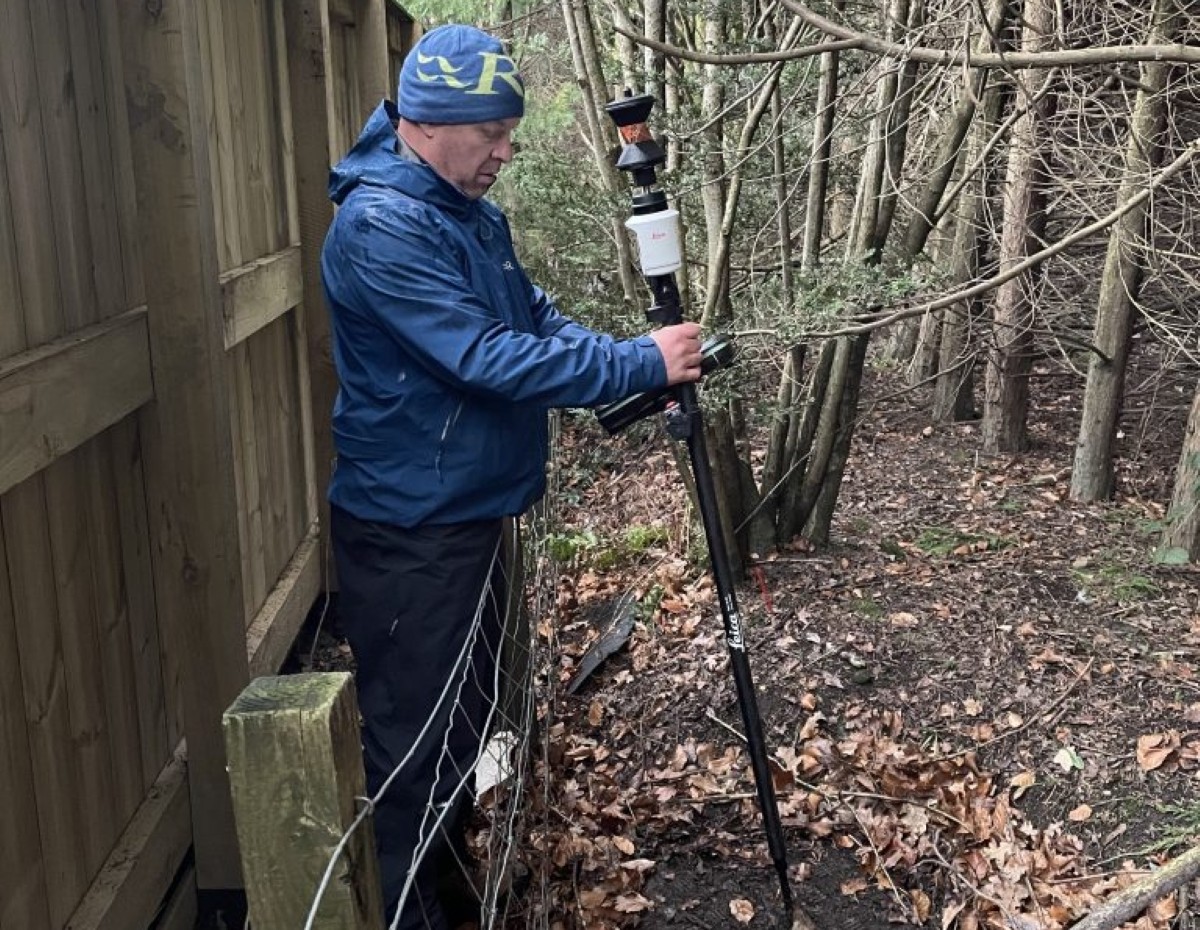
The A78 is closed, the lights are on, and the clock is the only thing that matters. On a night possession, the survey has to be finished and the team off the carriageway by five in the morning. There is no second attempt, no returning tomorrow to pick up the points that were missed.
Working that shift is 4Site Surveys, a Scottish firm designed to handle most projects with a single surveyor. Which raises the obvious question: how does a company this size end up on a trunk road programme at all?
The answer, according to Foggo, is that it doesn't get there alone.
The route in is relationships, not a tender portal
Major road programmes come with qualification requirements that effectively close the door on smaller firms. 4Site's way through is to be invited in by contractors who have already won the wider job.
That invitation is the product of years of delivering quality work on time.
One civils contractor, which first brought 4Site onto a small job years ago, now returns to the firm as a matter of course.
"I don't think they go to anybody else now when they need survey work,” he says. “I’m their first port of call."
How collaboration expands a small surveying firm's capabilities
Foggo’s survey business runs on a principle that can be described in a single word. "Collaboration,” he says. “That's quite a key word for my business now."
That collaboration runs in three directions at once. Upward, into the tier-one civils contractors who bring 4Site onto motorway and bridge projects. Sideways, into consultancies that extend the firm’s capabilities, such as the service that turns some of 4Site’s processed survey data into finished drawings to 4Site's own house style.
And outward, to specialists. Clients have asked whether 4Site will move into drone surveying. Foggo’s answer is no, but the client still gets the service.
"There's another firm in Glasgow that I can pick up the phone to,” he says. “It's not something I see myself getting into. I think what I do now is what I'm good at, and I'm quite happy to stick with that."
That's the trade at the heart of the model. Collaboration lets the firm present a broad capability to clients while focusing on its own expertise.
Small efficiencies add up when the clock is running
None of it works if the firm can't deliver its part of the bargain inside the window it's been given. That is where technology stops being kit and starts being the enabler that lets a small team say yes to a motorway possession in the first place.
Foggo's progression tells the story: a Leica TCR1205 at the outset, a TS16 robotic total station in 2015, an AP20 Auto Pole a few years later, a GS16 GNSS receiver, and a TS20 AI-powered robotic total station in January 2026. By the time he considered the total station upgrade, he had already invested in the AP20 and was looking for ways to get more from the Leica Captivate workflow he used every day.
The move from the TS16 to the TS20 came down largely to what Foggo could gain from pairing the newer instrument with his existing AP20, particularly when small efficiencies mattered across a time-critical job.
"The initialisation with the Auto Pole is almost instantaneous now, whereas previously that might take four or five seconds,” Foggo says. “It doesn't sound like a lot, but when you've got a big survey, that adds up."
Multiply those seconds across thousands of points – Foggo cites one job of around 6,600 points, completed in about six days – and the arithmetic becomes a deadline you either meet or you don't. The same applies when the instrument loses lock and has to find the target again."The power search on the TS20 is twice as quick as the TS16."
On a possession, that speed converts directly into something less measurable but more valuable.
"These projects are always night shift work,” he says. “So you've got deadlines, you have to be off the motorway by five in the morning. It just eases the stress of, am I going to get this finished in time?"
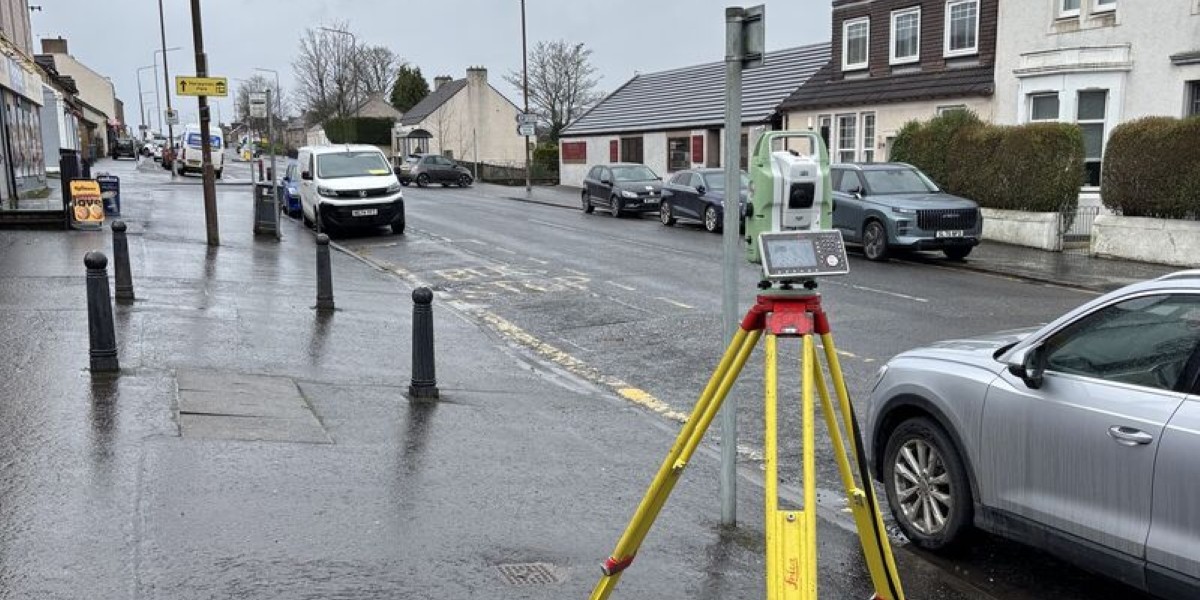
Then there is the weather, which in the West of Scotland is less a variable than a constant. The TS20's IP66 rating matters after previous experiences of water ingress with older instruments. And the survey kit, as Foggo notes, "works well, even in the dark."
Being equipped for the shift you've been handed is its own form of readiness, and so is knowing what's coming next. Foggo believes staying current is a requirement for running a successful business.
Roadshows, workshops, and training days are where he evaluates equipment long before he commits to buying it.
"I go to them all, and it's great as well to network with all the surveyors, other survey firms, just get insight into what they're doing."
The final collaborator in the network is the one that supplies the technology, service, and support.
"I've been very fortunate to be supported well by G2 Survey, who supply the instruments,” he says. “If I need to hire a laser scanner or another instrument, they make one available. They've been incredibly supportive, as well, at the end of the phone, and they're very quick to respond. I'm very fortunate to have the support network from G2 Survey and Leica Geosystems."
The discipline that holds the network together
A network only works if every party can rely on the others. 4Site's contribution to that is a refusal to trade quality for throughput.
"At the end of the day, we have to put out a quality product,” he says. “That's what brings the clients back."
It also requires being able to move when a client is ready.
"I usually find that if you've got anything more than a two- to three-week lead-in, the client is going to go somewhere else. It's a juggling act."
And it requires knowing what not to take. Foggo turns down work – some large wind farm surveys among it – when the scope doesn't suit the firm.
"That's where I tend to hold my hand up and say, this one's not for me. Ninety-nine percent of the time, the clients respect your honesty and they're happy to come back to you with the next project for a price. Definitely, honesty is the best policy in these situations. Don't be afraid to say no."
What this means for other survey firms
Skills shortages, rising project complexity, and digital workflows that connect multiple parties are all pushing the industry toward networked delivery. The competitive question for a small firm is shifting. It’s not so much a question of how many people you have, but who you work with and whether they can count on you.
Foggo's own advice to anyone considering the leap is straightforward.
"Collaborate. Don't be scared of collaboration. It can be a good thing. It can open doors for other work. If there are surveyors out there thinking about going out themselves, it's very doable. It's rewarding. Don't have fears about doing it. Just make sure you've got a good contact list to be able to fall back on."
And underneath all of it, the philosophy that delivers repeat business:"You're only as good as your last job," he says.
Before five in the morning, the kit is packed and the carriageway handed back. The data goes to the consultancy, the drawings go to the contractor, and the next call – when it comes – goes to 4Site first.


.jpg?sc_lang=de-de&hash=493D4107D5D9B4CED95FF15EEA8861E8)